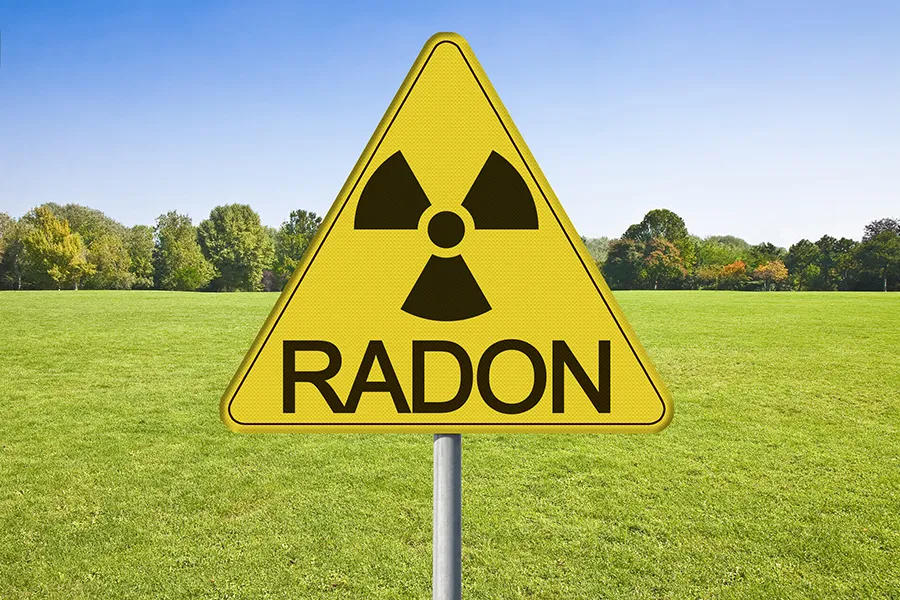
Radon, because it is a gas, is able to move though spaces in the soil or fill material around a home or workplace's foundation. Most buildings tend to operate under a negative pressure - this is especially true in the lowest portions of the building and during the heating season. This negative pressure acts as a vacuum (suction) that pulls soil gases, including radon, into the lower level of the structure.
Have an emergency? Get in touch on 01994 231 850
ABOUT RADON GAS
What is Radon Gas
Radon is a naturally occurring radioactive gas released from the ground. It forms as uranium and radium break down in rocks and soil, and it can seep into homes, workplaces, and other buildings without any obvious signs. Because radon continuously decays, it emits radiation that can be harmful when breathed in.
In England, radon exposure is recognised as the second leading cause of lung cancer, responsible for up to 2,000 fatal cases every year across the UK. The risk increases when radon builds up indoors, particularly in areas classed as higher-risk by UK radon maps. The good news is that radon levels are simple and inexpensive to test, and high readings can be reduced with straightforward mitigation work.
All employers in the UK are required by law to review radon risks within their premises as part of their health and safety obligations.
For further information on the health impact of radon, visit the Health and Safety Executive: www.hse.gov.uk
While radon is present everywhere at low levels, it only becomes a concern when concentrations rise indoors. Testing identifies this quickly, and effective solutions are available to bring levels back down to safe limits.
Imagine Seeing This on Your Drive…
You’re travelling from Somerset into Devon when a sign appears at the side of the road:
“WARNING – RADIOACTIVE AREA”
How would you react?
Would you simply carry on, or would you think twice and turn back?
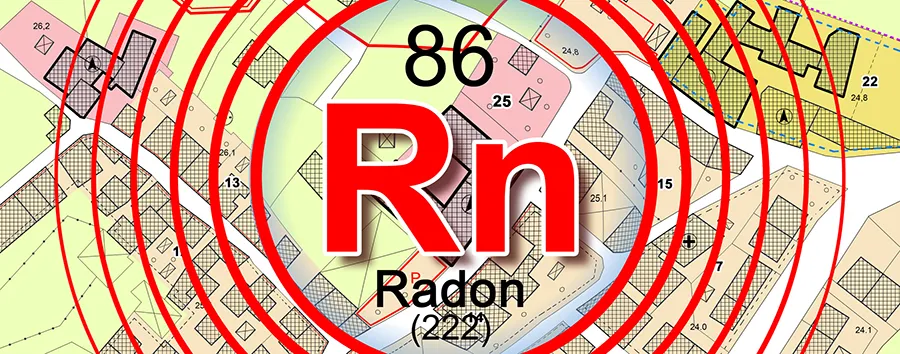
Now picture similar signs on the outskirts of Banbury, Northampton, the Yorkshire Dales, and across parts of Wales, Scotland and Northern Ireland. It would instantly feel like a serious public safety issue – something you’d expect clear warnings about and proper action taken.
The reality is that many of these areas already have naturally elevated radon levels. There are no roadside signs, no visible markers and no obvious clues. Yet radon remains a significant health risk, particularly in the regions identified by UK radon maps as higher-risk zones.